Build notes / 3 min read
Your bike. Your rules. Start with a better brief.
The best starting point for a custom motorcycle is a clear picture of how you want to use it. Before choosing a tank, seat or paint colour, write down your normal rides, the things you love about your current bike and the things you would change. That short brief gives every later decision a job.
Describe a real ride
Picture the ride you actually take, rather than the one in your saved Instagram folder. Is it a short hop across town? An early weekend escape? A longer day with someone on the back? Write down the journey, what you carry and where the bike spends the rest of its time.
A bike that looks brilliant parked outside a café can still be a frustrating choice for your everyday routine. Your brief should help a builder understand both the photograph you want and the experience you expect. If you ride in the UAE, include your usual season and time of day. Those are useful questions for a workshop conversation, without assuming the same setup suits every rider.
Give the references a reason
Pick three photographs you love. Next to each, write one sentence explaining why: the long tank line, the understated finish, the colour combination or the way the seat meets the rear of the bike. Then add a reference that is deliberately wrong for you.
This turns a moodboard into information. “I like the shape of this seat, but I need to carry a passenger” is far more useful than “make it look like this.” You can admire a racing silhouette without wanting every part of the riding position that comes with it.
Sort the essentials from the experiments
Make three short lists: keep, change and explore. The keep list might include a familiar riding position or a paint colour with personal meaning. The change list covers the things you already know bother you. Explore is where the open questions belong.
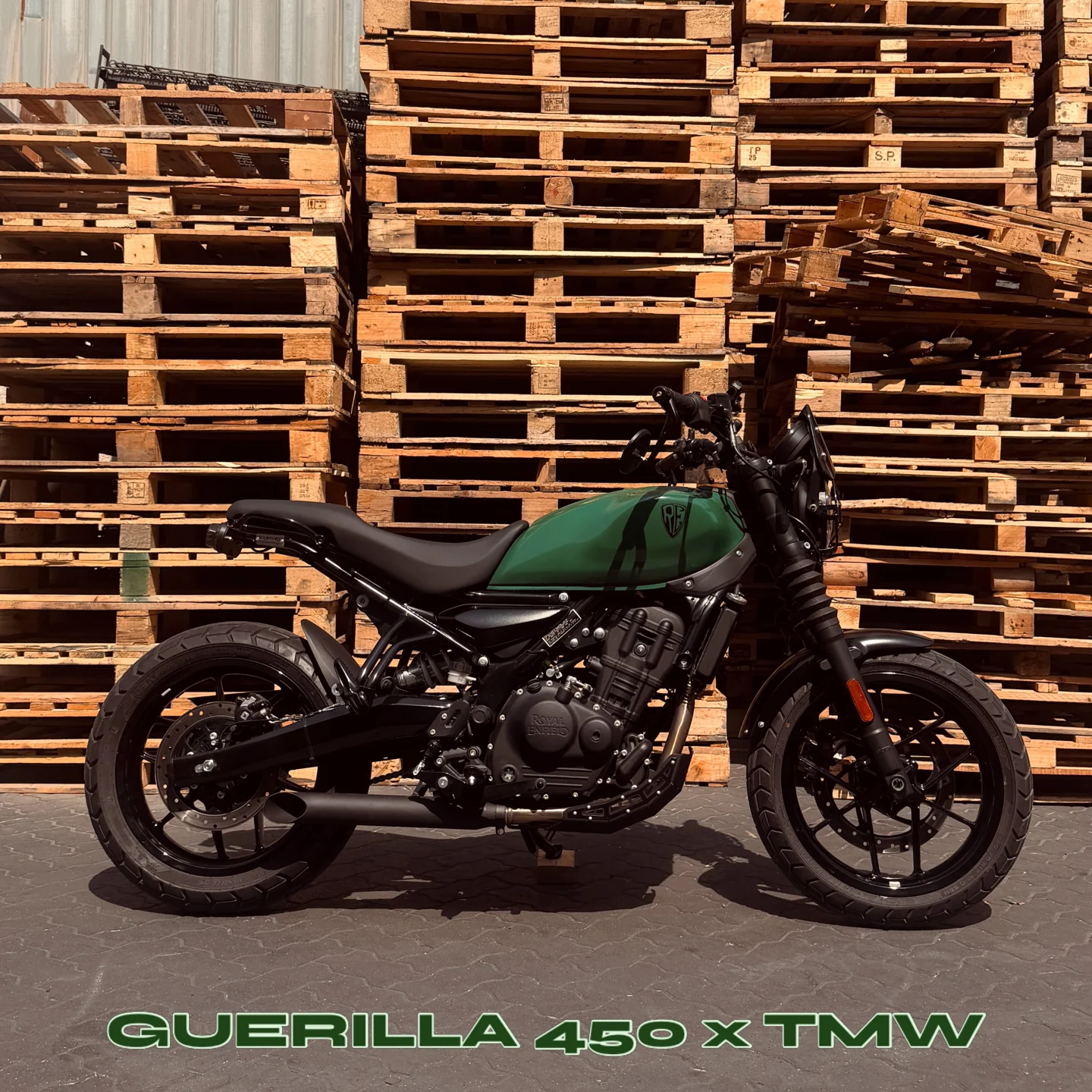
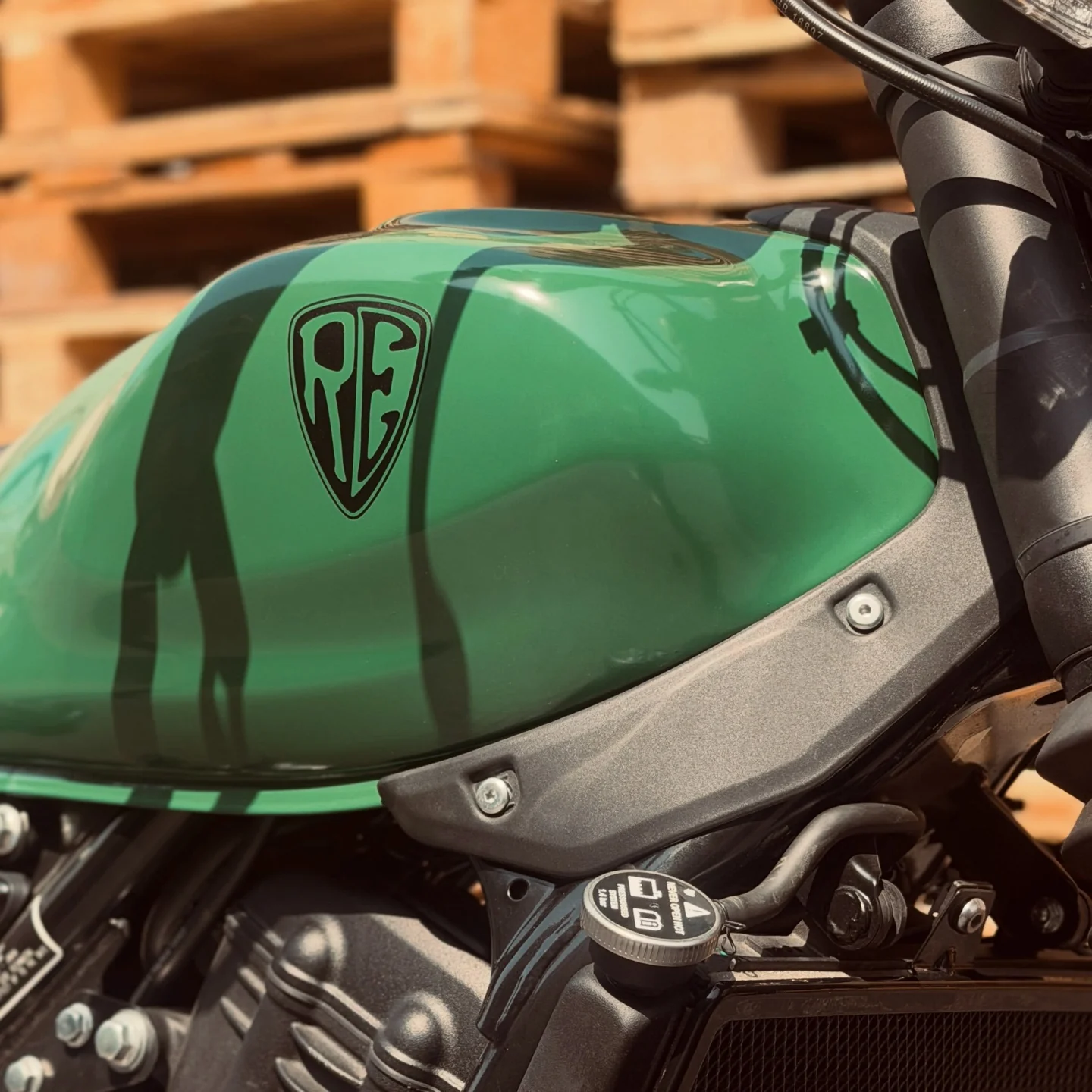
Keep that last list short. A project becomes difficult to explain when every component is undecided. Choosing one strong idea also gives the finished bike a sense of intention. Taco Moto Werx’s green Guerrilla 450 is a useful visual reference: the colour and dark details make a recognisable composition without needing a complicated explanation.
Have the awkward conversations early
Discuss the full budget and the desired timing before treating either as a promise. Ask what is included, what depends on the condition of the donor bike and what happens if the scope changes. Agree how new choices will be documented.
Separate aesthetic questions from questions that need specialist assessment. A photograph cannot tell you whether a proposed part fits, works correctly or is suitable for your intended road use. The workshop should assess those decisions on the actual bike.
Send a brief someone can use
A good first Instagram message can be five lines: your bike and model year, how you ride, what you want to keep, your three priorities and your rough timing. Include current photographs and a small reference set. You do not need a finished design to start a useful conversation.
The aim is to give the project a direction, with enough room for good ideas to improve it. A custom bike feels personal when the choices belong together and belong to the person riding it.
Do I need to know exactly what I want before contacting a workshop?
No. Describe your bike, riding habits and priorities, then bring a few annotated references. A clear problem is a better starting point than an untested parts list.
Sources & further reading
Original editorial guidance with source notes. AI-assisted draft, awaiting human editorial review.